
“N ap bwè”: the dilemma of illicit alcohol promotion by some Haitian artist-influencers
This article is also available in Français, Español and Kreyòl ayisyen

From the first preparatory year, the apprentice sociologist already knows that the basic principle of sociology makes it possible not only to study social phenomena but also to analyze the mechanisms that govern social relations. The sociologist’s craft therefore requires stepping back from common discourse and questioning what may seem normal. In light of Claude Bernard’s experimental method, the sociologist is invited to grasp the social fact while setting aside preconceived ideas and any moral judgment. Along the same lines, Émile Durkheim recommends discarding prenotions to better understand a society’s collective issues. The consequences of alcohol consumption, for example, are among the subjects that fall within the field of sociology.
As a social lubricant, alcohol has been widely used in many cultures for centuries. Archaeological traces of alcohol consumption date back to prehistory, before agriculture and settled life. The place of alcohol has changed over time. Depending on the era and the country, people have viewed alcohol differently. To quote Jean-Charles Sournia (“Histoire de l’alcoolisme”), alcohol is a cultural product; it is part of the social life of groups. Its consumption is so deeply rooted in our customs that it has taken a major place in humanity’s social dynamics. From generation to generation, alcohol consumption has always been a concern. Alcohol is one of the main risk factors for illness and premature death. According to the World Health Organization (WHO), alcohol consumption kills 3 million people worldwide each year. From cancer to depression, alcohol contributes to a long list of noncommunicable diseases and other health problems (cirrhosis of the liver, lung cancer), including injuries from road accidents and violence against others.
Paradoxically, alcohol can be very pleasant, with its euphoric, antidepressant and calming effects when consumed in moderation. It can also harm health when abused. Hence the dual social representation of alcohol.
Drinking alcoholic beverages is very widespread in Haitian society. Alcohol is served at almost every social occasion (wedding receptions, birthdays, communions, etc.). Alcohol is almost everywhere; it can be seen in every social class, in wealthy and poor families alike, and among people in different occupations, such as managers, students, workers and farmers. Alcohol use is practically part of the Haitian ritual. Sitting down for a drink expresses conviviality. Many even see it as a sign of social integration. However, alcoholism remains a public health issue. Chronic and excessive drinking can clearly have harmful consequences for the mental and physical health of those dependent on it.
Yet there is virtually no control over alcohol use in Haiti. According to the latest data published in 2020 on Haiti, alcohol-related deaths reached 428, or 0.49% of all deaths. Despite this grim picture, it is regrettable to see alcohol being glorified on social media and alternative media. These communication channels are extremely powerful and play a major role in daily life, especially for young people lately.
 Transport Package Services
Social media and alternative media have become powerful agents of socialization. Young people are easily influenced by audiovisual messages spread, rightly or wrongly, on these platforms. Knowingly or not, some artists/influencers are waging a relentless campaign encouraging excessive drinking without ever mentioning that this psychoactive substance is harmful to health. No one is spared this illicit advertising on the web. Over the past three years, some celebrities have promoted a relatively unhealthy lifestyle. Take, for example, a song in the “Rabòday” style: “#Parese, leve pou bwè kleren” (Lazybones, get up and drink kleren). This absurd song suggests one should drink nonstop; in other words, drinking constantly is a kind of duty. More recently, a current hit by a very popular kompa band (HMI) added a slogan on the lips of almost all Haitian youth: “N ap bwè” (We’re drinking). It would tell everyone to drink plenty of any liquid derived from the formula CH3CH2OH. What madness. Worse, teenagers are the most receptive to this harmful promotion. Meanwhile, almost all of the country’s key players are silent about these excesses, as if all were well. Yet this toxic practice is quietly eating away at the Haitian community. Encouraging people to drink excessively is comparable to inciting violence, as shown by the correlation between alcohol and juvenile delinquency. The dilemma is that in a country where citizens are deprived of leisure and where violence and fear tear the social fabric, alcohol seems to become the only form of entertainment. That does not prevent a call for vigilance.
The situation is serious; it is time to sound the alarm. Efforts must be stepped up to fight this carelessness, notably by banning the illicit promotion of alcohol consumption. Drinking alcohol as such is not a problem; it may be a need in moderation and a poison in excess, since too much of anything is harmful. Alcohol is also often associated with serious crimes such as murder, robbery and rape. Above all, alcoholism is a perplexing social fact that cannot be ignored. This complacency must stop. Young and not-so-young people are particularly vulnerable to alcohol’s harmful effects. Artists and influencers must therefore use their influence responsibly toward them. If people are going to drink, it must be in a controlled way.
Lauture Jacques
lolo.jacques33@gmail.com
05/19/2024
Read also

Salvadoran strikes destroy Jeff Gwo Lwa’s residence as Bukele calls it a “gift” to Haitians for Vertières
18 Nov
Hebdo24 refreshes its visual identity and unveils a more modern logo
12 Nov
Haiti Elections: Jean Ernest Muscadin Resigns as Chief Prosecutor in Miragoâne
6 Nov
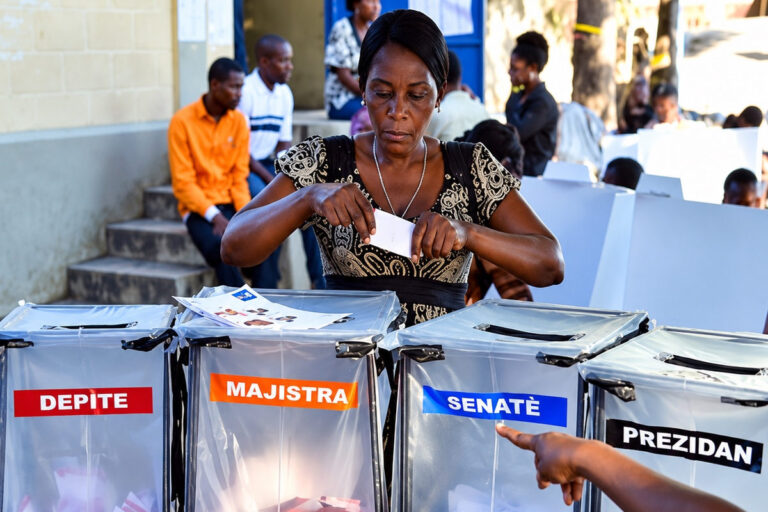
Haiti Elections: Nearly $40 Million Still Needed to Close the Electoral Budget Gap
5 Nov