

Minister Sandra Paulemon Rallies the Government Around a New Recovery Plan for Haiti
This article is also available in Français and Kreyòl ayisyen
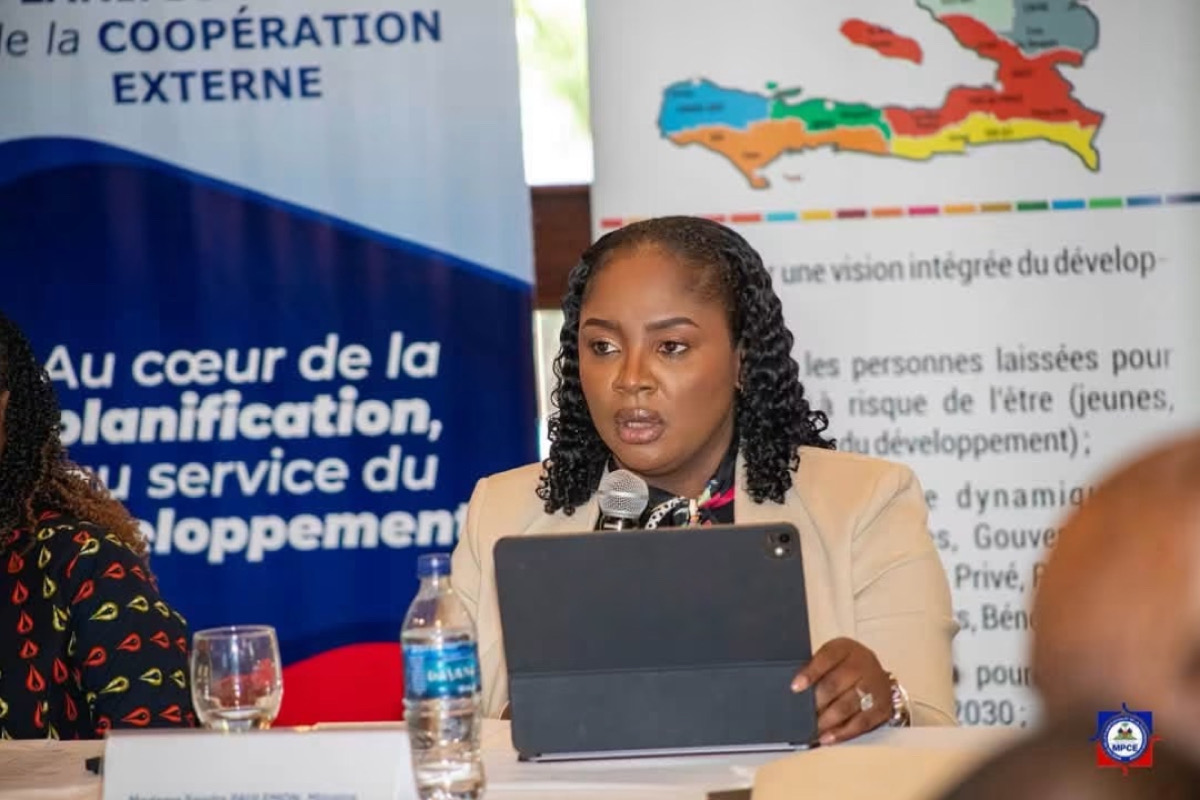
Planning and External Cooperation Minister Sandra Paulemon brought together several cabinet members and representatives of international partners on Monday around the 2026-2030 National Program for Stabilization and Economic, Social and Territorial Recovery (PNSREST). The goal is to define a common framework for responding to the consequences of the security, economic and social crisis affecting the country.
The workshop to review and approve the program’s strategic guidelines brought together the ministers of Economy and Finance; Trade and Industry; Women’s Affairs and Women’s Rights; Agriculture, Natural Resources and Rural Development; and Social Affairs and Labor. Representatives of the United Nations, the World Bank and the Inter-American Development Bank (IDB) also took part. Developed under the leadership of the Haitian government through the Ministry of Planning and External Cooperation (MPCE), with technical support from the UN system, the PNSREST is meant to serve as the strategic framework for stabilization and recovery efforts in 2026-2030. The program aims in particular to strengthen the state’s presence and capacity in crisis-hit areas, restore access to essential services and create economic opportunities, especially in areas hosting displaced people.
The program rests on eight strategic pillars: governance, security and territorial administration; economic recovery; basic social services; essential infrastructure; environment and risk management; community security and sustainable return; gender and inclusion; and steering and coordination. Women and young people are among the main groups targeted. The government also intends to support initiatives that can promote inclusive growth, create decent jobs and reduce the vulnerability of communities affected by the crisis.
At the workshop, Paulemon advocated moving beyond one-off responses toward structured, coordinated and lasting action. She stressed the need to create conditions in host areas — particularly outside the metropolitan area — that would allow displaced people who wish to do so to settle there permanently, with access to services, jobs and security. She also highlighted the importance of involving local governments in implementing the program. UN Resident and Humanitarian Coordinator in Haiti Nicole Boni Kouassi called for a collective commitment from international partners, urging better alignment of UN agencies’ work with national priorities and greater resource mobilization in support of the Haitian government.
With the strategic guidelines approved by the relevant ministers, the authorities plan to continue technical work to flesh out the programs under the eight pillars and identify quick-impact projects that will be visible to the population. Implementing the PNSREST will require mobilizing the government, the UN system, international financial institutions and other technical and financial partners. The challenge now will be turning these guidelines into concrete action in the areas hardest hit by the crisis.
Journaliste- Rédacteur, avocat et éducateur haïtien. 📩 Email: bernadinjules@hebdo24.com Suivez-moi sur X : @bernadinjules24
All articles Transport Package Services
Read also

International Cooperation: Minister Sandra Paulemon Seeks Stronger Coordination of Development Aid in Haiti
5 Nov
Customs Collects a Record 11.5 Billion Gourdes in October Despite Plunging Fuel Revenue
3 Nov

American Airlines Resumes Daily Miami–Cap-Haïtien Flights With an All-Haitian Crew
2 Nov

Minister Sandra Paulemon and UNDP Step Up Dialogue on 2026-2027 Development Priorities
28 Oct