

What if everyone talked to everyone?
By Hebdo24
This article is also available in Français and Kreyòl ayisyen

Since 2004, the Haiti of the elites, civil society and the entire population should have seized a historic opportunity to unite and engage in dialogue. Yet on the eve of the bicentennial of our independence, internal and external forces prevented us from coming together, from transcending our differences to affirm our unity. That moment should have been a display of national pride, but it was drowned in empty slogans such as “gren nan bouda” and “rat pa kaka,” the promotion of divisive ideas such as the “new social contract,” and the rise of groups such as the Group of 184 and Ti Minorité Zwit.
The missed opportunity of the bicentennial
Instead of strengthening our national cohesion, the events of 2004 revealed that the only beneficiaries of these orchestrated fractures were a minority of elites and opportunistic clans. While most of the population sank further into poverty and indifference, some groups enjoyed indecent privileges: tax exemptions, unlimited franchises and economic advantages at the expense of basic public services. The new social contract, supposed to restructure the nation, was merely a pretext to impose dead-end transitions led by disconnected representatives without vision, leadership or sense of responsibility.
A methodical national deconstruction
Since 2004, Haiti has undergone a process of systematic deconstruction. Natural disasters, which could have united us in solidarity, instead exposed the flaws of a state riddled with corruption and indifference. Rampant insecurity, a glaring symbol of national collapse, continues to undermine our hopes. Manipulated by internal and external interests, it further impoverishes the population, amplifies inequality and deepens social exclusion.
The height of this destructive spiral was reached on July 7, 2021, with the assassination of sitting President Jovenel Moïse. This tragic act exposed the insidious plot of some Haitians against their own nation. Despite a critical context, the refusal to dialogue among the country’s vital forces persisted. With real dialogue, many crises could have been avoided. But pride, personal interests and the lack of political will prevailed.
Total blockage and the path of dialogue
Today, Haiti is paralyzed. Everything is blocked. There is no clear leadership, no vision, not even a collective will to solve the problems weighing on the country. Yet only sincere, unifying and inclusive dialogue could pull Haiti out of this chaos. Nothing works; no sector has been spared from decline. This chaos is the direct consequence of the absence of real leadership capable of creating unity and establishing inclusive dialogue. What Haiti needs is unifying, sincere dialogue without ulterior motives.
This dialogue must bring together all components of Haitian society: elites, the middle class, peasants, young people, the bourgeoisie, civil society, the ghettos, economic groups, political parties, the Church, Protestant denominations, Vodou practitioners, armed groups, women and the diaspora. It must break social, political and economic divides to build a common future. Only inclusive dialogue, driven by a real desire for change, can pull Haiti out of the infernal cycle of instability.
The urgency of inclusive dialogue
The current political, economic and environmental crises reveal a brutal reality: Without dialogue, there is no solution. The country is fragmented, with each actor seeking to maximize their own interests at the expense of the collective interest. Manipulated revolts, “peyi lòk” shutdowns, “kanpe dèyè barikad,” “Bwa Kale,” “Bal Kale,” “lari pa bon,” special interests and glaring inequality have only amplified poverty, exclusion and instability.
Inclusive dialogue is the only path to national reconciliation, guaranteeing the rights of all citizens and laying the foundations for responsible governance. It will require:
1. Immediate disarmament and serious reintegration to restore a minimum of security.
2. Territorial consultations to gather the priorities of local communities.
3. A national reconciliation conference to seal a consensus on national priorities.
The role of the international community
The international community bears part of the responsibility for this disunity. Its clumsy interventions, often based on geopolitical or economic interests, have helped widen the gap between Haitians. The lessons of past failures, notably the chronic instability caused by successive U.N. missions, must guide new approaches focused on institutional strengthening and support for genuine dialogue.
The United Nations, the OAS and major donors must stop imposing technocratic solutions. They should instead facilitate spaces for dialogue and encourage mechanisms that strengthen democratic governance, social integration and national sovereignty.
Breaking the cycle of instability
Haiti cannot rebuild without a real campaign of social and political integration. It is imperative to break with cycles of sterile transitions, political manipulation and lack of vision. Reconciliation based on inclusive dialogue is essential to stabilize the country and begin real social transformation.
Two centuries after its independence, it is time for Haiti to become aware of its collective strength and redefine its destiny through unity, social justice and responsible governance. Inclusive dialogue is the key to turning this dream into reality.
It is time for every Haitian, whatever their position, to agree to talk to the other, not to divide but to build together. The current chaos is not inevitable. With sincere dialogue, Haiti can be reborn and regain its dignity as the first independent Black republic. The ball is in each of our courts.
Patrick Alexis
Engaged citizen
alexispat@gmail.com
Hebdo24 est un journal en ligne qui fait de la permanence mais aussi la rigueur dans le traitement de l’information son cheval de bataille.
All articles Transport Package Services
Read also
Hebdo24 refreshes its visual identity and unveils a more modern logo
12 Nov
Haiti Elections: Jean Ernest Muscadin Resigns as Chief Prosecutor in Miragoâne
6 Nov
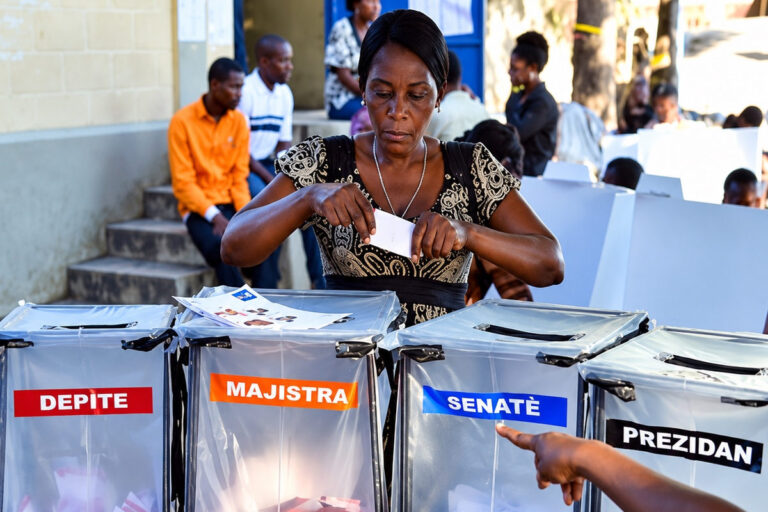
Haiti Elections: Nearly $40 Million Still Needed to Close the Electoral Budget Gap
5 Nov
Bukele Urges Haitians to Take Back Control of Their Country and Preserve Dessalines’ Legacy
4 Nov