

In Nepal, youth say “NO” through violence; in Haiti, authorities have been warned
This article is also available in Français, Español and Kreyòl ayisyen
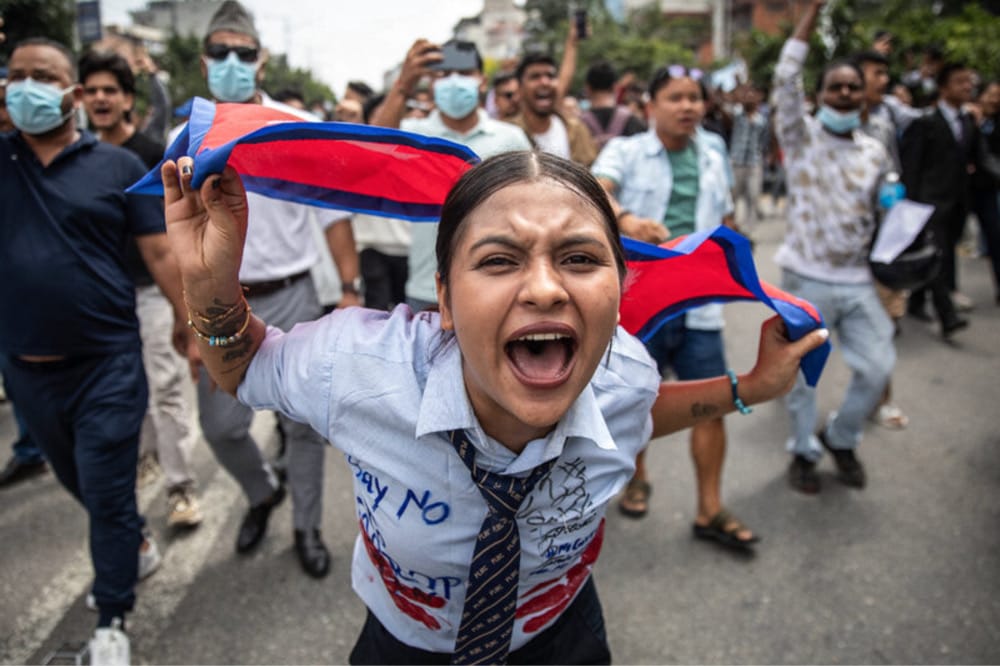
In Nepal, it was young people, led by Generation Z, who finally said “enough.” Tired of political instability, mass unemployment and a lack of prospects, they turned their frustrations into a collective movement. Their cries, raised in the streets and amplified on social media, cracked the foundations of a system that thought itself unshakable.
This revolt did not come out of nowhere: It is the product of decades of broken promises and shattered dreams.
Haiti on the brink of the same tipping point
Haiti is not far from the same tipping point. Here too, young people live a suffocating reality: schools closed by insecurity, endemic unemployment that crushes ambitions and pervasive violence that robs them of even the simplest dreams.
In a country where the future seems uncertain and out of reach, frustration is quietly building, like an ember ready to burst into flames.
Haiti’s Generation Z is watching
Young Haitians, like their Nepali counterparts, are watching, analyzing and sharing their anger on social media. Connected to the world, they see how other generations elsewhere are fighting to claim their right to a decent future.
It is only a matter of time before this online anger spills into the streets, with all the force of a generation that has nothing left to lose.
A state blind to the emergency
The Haitian state seems to ignore this reality. Absorbed in political calculations and paralyzed by insecurity, it forgets that young people are not only the majority of the population but also the potential engine of renewal.
 Transport Package Services
Every day that leaders fail to invest in education, jobs and democratic spaces, they dig a deeper gap between the state and its youth. And a country that turns its back on its youth seals its own failure.
A universal warning
What happened in Nepal is not an isolated accident: It is a universal warning. Wherever young people are deprived of a future, they end up finding a voice, often in the streets, sometimes through violence. Haiti is no exception.
Haiti’s Generation Z, digital and globalized, is more aware of its rights and its role than people think. The day it decides to turn its despair into revolt, there will be a social explosion.
There is still time to act
There is still time to prevent the explosion. That requires a collective awakening: guaranteeing security, creating economic opportunities, restoring trust in the state and, above all, listening to young people.
Ignoring the calls of young people means preparing for the storm.
Nepal’s mirror reflects a troubling image back to Haiti: that of a generation that, caught between despair and revolt, will sooner or later demand what it has been denied for too long: a future.
Journaliste- Rédacteur, avocat et éducateur haïtien. 📩 Email: bernadinjules@hebdo24.com Suivez-moi sur X : @bernadinjules24
All articlesRead also

Reverend Pastor Amel Lafleur dies at 65
13 Nov

Three Haitian-American Women Elected to School Boards in South Florida’s Largest Counties
7 Nov

Nippes Turns 23: Assad Volcy Calls for Turning the Department’s Heritage and Resources Into Engines of Development
2 Nov
Burkina Faso Adds Haitian History to Its School Curriculum
29 Oct