

Organ trafficking and state silence: when the duty to protect becomes complicity by omission
This article is also available in Français, Español and Kreyòl ayisyen
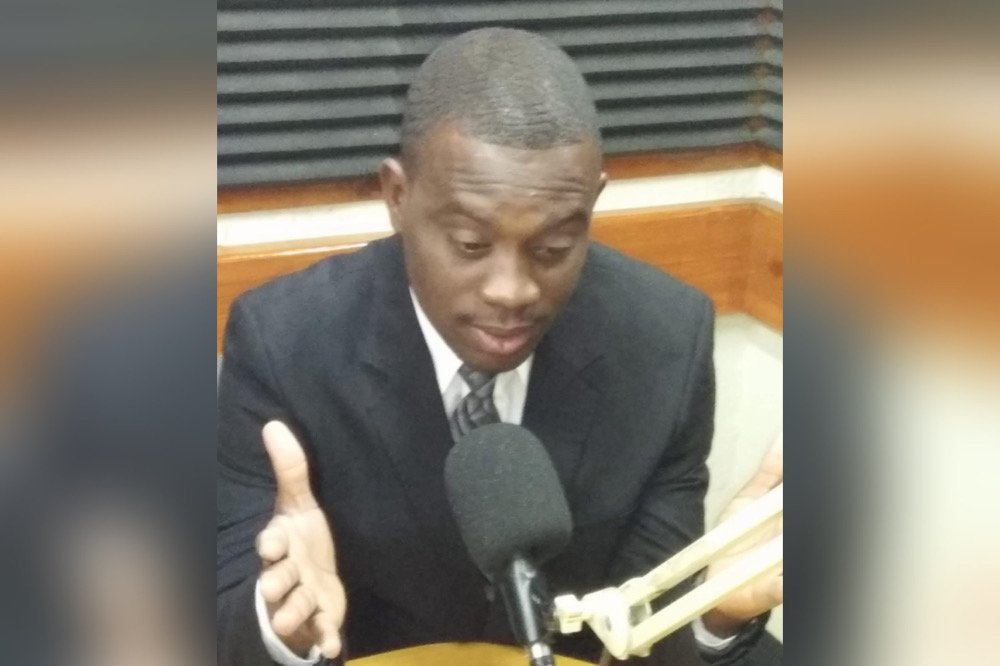
Revelations by the gang leader known as “Lanmò San Jou,” who claims to have found human bones on occupied land and raised the possibility of organ trafficking linked to Andy Apaid, are not merely a media scandal.
They are above all a formal legal notice to the Haitian state, which is bound to respond in accordance with the principles of public law.
These revelations trigger three fundamental obligations of public authority:
- The constitutional obligation to protect human life and dignity
- The duty to investigate any allegation of serious crime
- The principle of impartiality and equality before the law
Yet the reaction — or rather the lack of reaction — of the PNH, the DCPJ, CONALD and the Presidency (CPT) amounts to a serious institutional failure that could engage the state’s legal liability.
I. State silence: a direct violation of constitutional obligations
Article 19 of the Haitian Constitution clearly requires the state to “guarantee the right to life, health and respect of the human person.”
When human remains are publicly mentioned, this obligation becomes not only legal but imperative.
The state must:
- open a forensic investigation,
- mobilize its specialized agencies,
- inform the public.
None of these obligations has been met.
In legal terms, this silence can be described as:
- Wrongful administrative silence
- Breach of the duty of diligence
- Denial of institutional protection
Legally, it is gross negligence, because it concerns an essential domain: the protection of human life.
II. The PNH and DCPJ: selective conduct contrary to the principle of impartiality
There is no question that the “Lanmò San Jou” gang has terrorized Croix-des-Bouquets for several years.
Yet:
- no major strategic operation had been carried out,
- no solid judicial case had been presented,
- no strong resolve had been shown.
But as soon as a video mentions the name of an influential business figure, an immediate and remarkably coordinated police offensive is launched.
In public law, this contrast reveals a major problem: public action would depend on the status of the person implicated, in violation of the principle of equality before the law.
The PNH and DCPJ thus become, even by omission, agents of institutional discrimination.
 Transport Package Services
This kind of conduct amounts to:
- an abuse of power through misuse of purpose,
- a breach of neutrality,
- a violation of the principle of good administration.
III. CONALD: failure to act despite direct jurisdiction
CONALD, which is legally responsible for fighting drug trafficking, did not respond to the statements of the gang leader, who admits using the seized land to grow marijuana.
Its silence engages:
- administrative liability,
- disciplinary liability,
- and potentially passive complicity, legally defined as “assistance by abstention.”
IV. The Presidency: no institutional leadership and a governance vacuum
Amid an extreme security crisis, the Presidency is responsible for ensuring:
- coordination of the security agencies,
- the neutrality of police action,
- institutional transparency.
By remaining silent on a case involving a gang leader, a major business figure and serious crimes against human beings, the Presidency is committing a political failure and a failure of governance.
Legally, this silence can be interpreted as:
- a renunciation of command over the security forces,
- a failure to guarantee fundamental rights,
- a risk of being accused of indirectly protecting private interests.
V. The police response: a belated and legally suspect operation
A police intervention is legitimate only if it is part of:
- the continuity of public security,
- the protection of the population,
- the neutrality of the security forces.
Here, however, the PNH acted only after the sensitive revelations, which raises legitimate doubt:
- Is the operation aimed at crime?
- Or is it aimed at eliminating an inconvenient source of information?
Either way, we are facing an operation tainted by its context, and therefore open to:
- an action for annulment on grounds of abuse of power,
- an administrative investigation,
- constitutional review.
Conclusion: A state that stays silent breaks the law
The Apaid–Lanmò San Jou case is not just a security matter. It is a matter of public law, involving:
- the liability of the state,
- constitutional obligations,
- the neutrality of institutions,
- public trust.
When the PNH, the DCPJ, CONALD and the Presidency stay silent on allegations of attacks on human life but react forcefully as soon as the powerful are named, the state stops being impartial and becomes selective.
Such a state is no longer governed by the rule of law. It becomes a state of collusion.
As a journalist and legal expert, I will never defend arbitrary power. I defend legality, truth and the people’s right to impartial justice.
Emmanuel Taulème BRINA
Journalist – Public Law Specialist
Read also
Erik Prince: Zero Results, One Year After a $52 Million Contract With the Haitian Government
27 Aug
Haiti: Decline as a Strategy for Power
20 Aug
Armored Vehicle Torched, Officers Wounded in Kenscoff… Meanwhile, Vladimir Paraison Puts On a Show
8 Aug
When Foreign Diplomats Become Haiti’s “Instant Experts”
4 Aug