

Frédéric Marzouka Caught Up by His Legal Past: From the Dominican Lottery to U.S. Federal Court
This article is also available in Français, Español and Kreyòl ayisyen
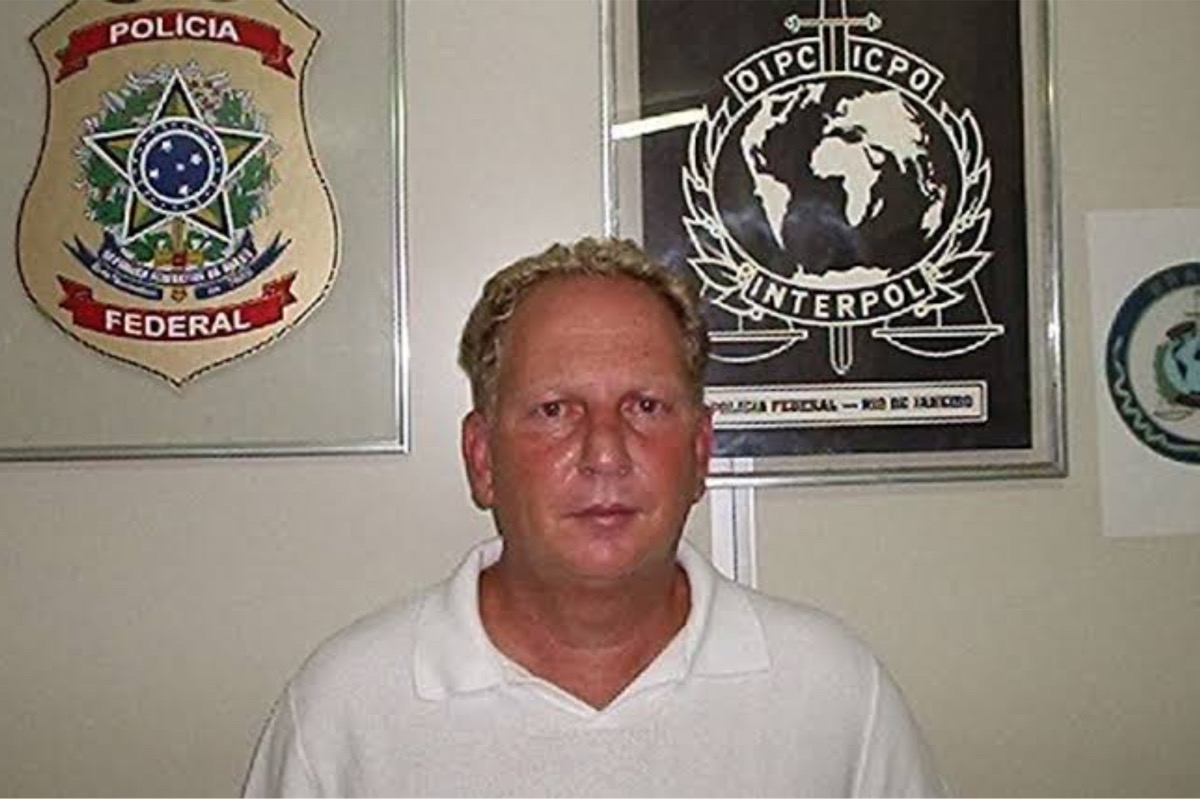
Nearly thirty years after the controversial Dominican national lottery affair and twenty years after his arrest in Brazil on a U.S. extradition request, Haitian businessman Frédéric Salers Marzouka is once again before a U.S. federal court. On August 11, 2026, Marzouka filed a habeas corpus petition in the U.S. District Court for the Middle District of Georgia. The case concerns his detention under U.S. immigration law. In the court file, he is identified as a “detained alien.”
This new legal battle brings back to the surface a history marked by several legal cases spanning the Dominican Republic, Brazil, Haiti and the United States.
Marzouka’s name first surfaced in 1997 in a major alleged fraud case involving the Dominican national lottery. According to the Dominican press at the time, he was among those suspected of taking part in a scheme to electronically rig the draws. The affair caused losses estimated at tens of millions of Dominican pesos. After turning himself in, Marzouka was detained and then transferred to a clinic in Santo Domingo for medical reasons.
On August 13, 1997, he reportedly left the clinic with the police officer assigned to guard him. The officer was later prosecuted, according to Dominican press reports at the time. The affair was one of the first public episodes in a legal saga that would take on an international dimension a few years later. On February 17, 2006, nearly nine years after the Dominican case, Marzouka was arrested in Rio de Janeiro by Brazilian authorities as part of an international procedure.
The United States was seeking his extradition at the time. According to Brazilian court records cited in the file, U.S. authorities accused him of drug trafficking and money laundering, among other charges. Marzouka denied the accusations. His defense argued, in particular, that some financial transactions considered suspicious by U.S. authorities were transfers between his own accounts in Haiti and the United States.
In November 2006, Brazil’s Supreme Federal Court authorized his extradition under certain conditions, including capping any sentence at thirty years in the event of a life sentence. Marzouka nonetheless kept fighting extradition in the courts and remained in detention in Brazil for several years.
 Transport Package Services
Political connections that raise questions. Over the course of this long legal saga, Marzouka’s name has also been linked to Haitian political figures and circles close to former presidents Jean-Bertrand Aristide and René Préval.
These links were raised in particular during the extradition proceedings in Brazil. Court documents indicate that his defense sought information about his alleged relationships with the former Haitian presidency. Press reports have also mentioned possible financial support for figures associated with the Aristide-Préval political camp. These elements should, however, be treated with caution. Some are statements or allegations that have not necessarily been corroborated by a court ruling. In particular, no available evidence independently establishes that Marzouka actually financed a René Préval presidential campaign.
The petition filed on August 11, 2026, concerns his current detention under U.S. immigration law. The proceedings could allow the federal court to examine the conditions of his detention and the legal grounds cited by U.S. authorities. However, the exact circumstances that led to his being placed in the custody of U.S. immigration authorities are not yet sufficiently documented.
It would therefore be premature to claim that he was recently arrested by ICE or to determine the reasons with certainty. These points will need to be clarified by forthcoming court and administrative documents. Marzouka’s return to U.S. federal court thus puts the spotlight back on a man whose legal history spans nearly three decades.
From the Dominican lottery controversy in 1997 to his arrest in Brazil in 2006 and his new legal battle in the United States in 2026, his name has been linked to several international proceedings. Added to this legal trajectory are lingering questions about his ties to certain Haitian political circles.
For now, the new U.S. case is primarily about his immigration detention. The next legal steps, however, could shed light on the circumstances of that detention and help explain why, twenty years after his arrest in Brazil, Frédéric Salers Marzouka is once again drawing the attention of the U.S. justice system.
Journaliste-Rédactrice à Hebdo24 | Politicienne | Experte en Relations Internationales 📩 : jenny@hebdo24.com Suivez-moi sur X : @jennyhebdo24
All articlesRead also

Junior Bonheur stands trial in Vivy Mitchell case
15 Nov
Radio Télé Métronome on the Brink: Legal Battle Pits Guerrier Dieuseul Against Jean Corvington
27 Oct

High Court of Justice: UN Warns of Risk of Impunity in Haiti
8 Oct

Alix Didier Fils-Aimé Opens the New Judicial Year Under the Banner of Reform and Efficiency
5 Oct